

This legislation has particularly big benefits for J-1 workers earning tips.
Until recently, every dollar in tips was fully taxable at the federal level, no matter how much you earned or where you worked.
That all changed with the bill, which was passed and signed into law on 4 July 2025, serving as a major shake-up in U.S. tax rules for nonresidents.
Here’s everything you need to know!
Note: By the end of the year, further clarifications are to be announced.
How were tips taxed before the OBBBA?
Under the standard U.S. federal tax system, tips were treated the same as regular wages.
If a J-1 student earned $10,000 in tips and $7,000 in wages, they were taxed on the full $17,000.
This created a heavy tax burden for hospitality workers, especially in states with high tipping.

What’s changed under the One Big Beautiful Bill Act?
The OBBBA introduced two major changes for nonresidents:
1. Tip income cap:
Anything below $25,000 is taxed at standard rates.
2. Lower withholding rates for seasonal nonresident workers:
J-1 workers can now expect larger refunds or lower tax bills due to higher effective exemptions.
This is a game-changer for J-1 workers in hospitality, where tips can easily eclipse wages.
3. Overtime work:
The bill introduces a temporary federal income tax break on overtime pay, effective from 2025 through 2028. Under this provision, workers can deduct up to $12,500 (or $25,000 for joint filers) of their qualifying overtime income from federal taxable income.
The deduction applies only to the premium portion of overtime pay—for example, the “extra half” in time-and-a-half—not to regular wages.

Real-life scenarios: Before and after the OBBA
Let’s look at three common situations and how the OBBBA impacts each one.
Scenario 1: Hospitality worker in Hawaii
16-week wages total
- Wages: $7,186.40
- Tips: $3,930.24
Federal tax owed
- Under 2024 rules: $1,112
- Under OBBBA: $719
- Savings: $393
Takeaway: Even with modest tips, workers save hundreds under OBBBA.
Scenario 2: High-earning season in California
16-week wages total
- Wages: $7,402.56
- Tips: $27,960.48
Note: Only the first $25,000 in tips qualifies for reduced tax under OBBBA. The remaining $2,960.48 is fully taxable.
Federal tax owed
- Under 2024 rules: $4,005
- Under OBBBA: $1,036
- Savings: $2,969
Takeaway: OBBBA drastically reduces taxes for high-tip earners — nearly $3,000 saved.
Scenario 3: Restaurant worker in New Hampshire
16-week estimate (with 5% overtime)
- Regular wages: $4,616
- Overtime wages: $301
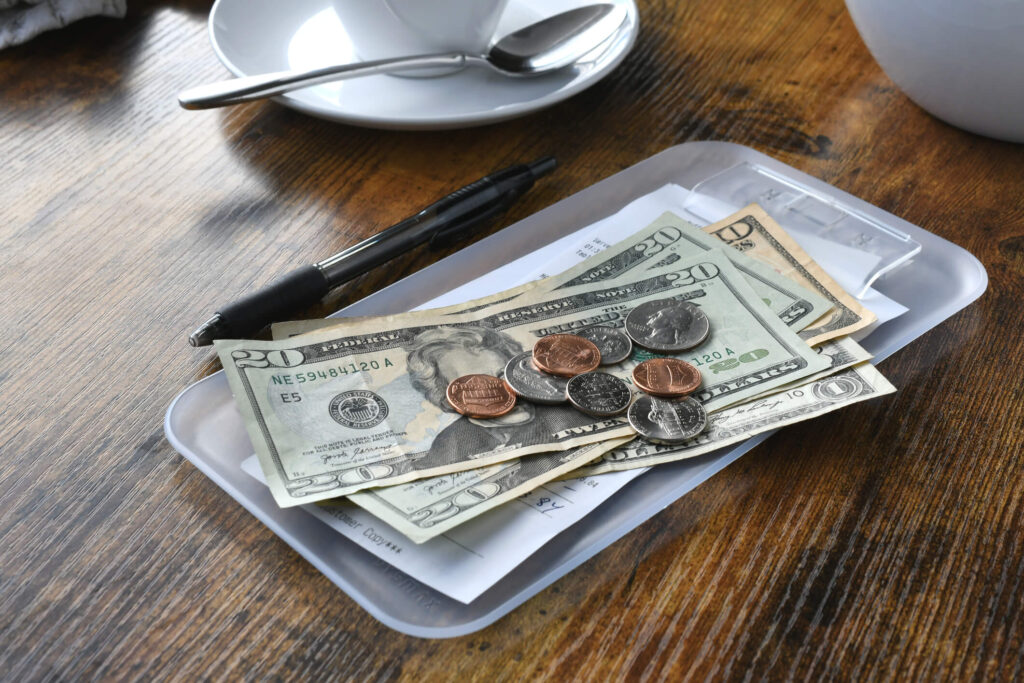
- Tips: $17,606 (only $15,000 benefits from reduced tax under OBBBA)
Federal tax owed
- Under 2024 rules: $2,464
- Under OBBBA: $722
- Savings: $1,742
Key takeaway: When most of your income comes from tips, the new tax cap means your effective taxable income drops significantly.

What this means for you
For J-1 participants working in the U.S., the One Big Beautiful Bill Act offers substantial tax relief, especially if you’re in a tip-heavy job.
While you’re still required to report your full earnings, the OBBBA rules significantly reduce what you owe — often resulting in larger tax refunds.
However, there are still some points to remember:
- Always keep records of your tips.
- The rules apply to both cash tips and other forms of payment.
- File your return with a platform that understands nonresident taxation (like Sprintax Returns).
Whether you’re working in California, New York, or anywhere in between, Sprintax Returns is the only tax preparation software designed specifically for nonresident aliens in the U.S. – including J-1 Work & Travel participants!
Every year Sprintax helps thousands of nonresidents with their taxes, and we’d love to help you too.